


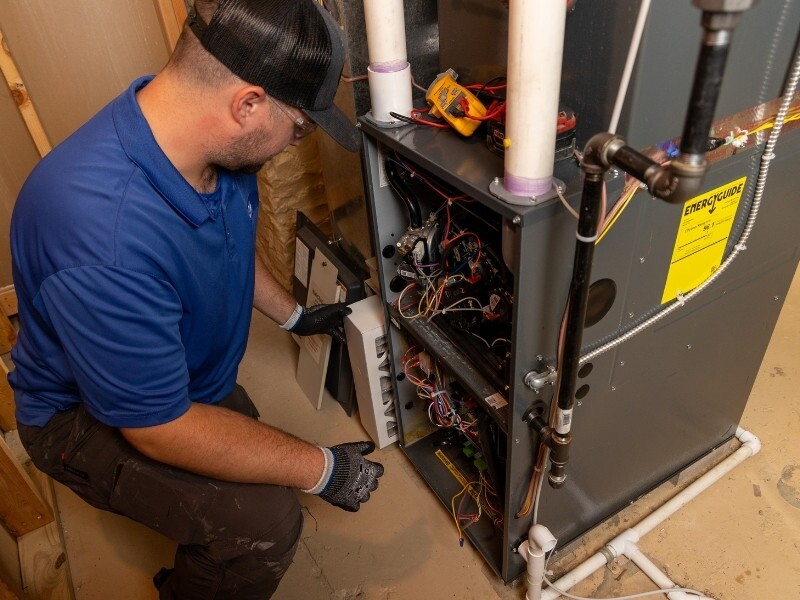
January is typically the coldest month in Dublin, OH, and it’s when furnaces work the hardest. The most common furnace problems homeowners face in January include uneven heating, higher energy bills, unusual noises, short cycling and systems struggling to keep up with cold temperatures. Below, we’ll explain why these issues happen and what they often indicate about your system’s performance.
Furnaces Struggling to Keep Up With January Cold
When temperatures stay below freezing for extended periods, it causes your furnace to run longer and more frequently to maintain comfort. This sustained demand can often reveal airflow limitations, insulation issues or performance loss that wasn’t noticeable earlier in the season. In many cases, the system is operating as designed but is being pushed to its limits by extreme cold.
Uneven Heating Throughout the Home
Uneven temperatures are one of the most common comfort complaints during January. For example, you may notice that some rooms feel colder due to ductwork design, airflow balance or thermostat placement.
Cold outdoor temperatures can make these differences more obvious, especially in rooms with exterior walls or less insulation. Addressing airflow and distribution issues can help improve overall comfort.
Higher Energy Bills During Peak Winter
January heating bills are often the highest of the year because systems must run longer to maintain indoor temperatures. Even a well-functioning furnace will use more energy during prolonged cold weather. That said, dirty components or minor efficiency losses can increase energy usage further. Routine furnace maintenance can help ensure your system is operating as efficiently as possible.
Unusual Noises From the Furnace
Homeowners often notice new or louder sounds from their furnace in January. This is because of increased runtime, as components often expand and contract more frequently, leading to pops, rattles or humming sounds.
Some noise is normal, but sudden or persistent changes shouldn’t be ignored. New sounds can indicate mechanical wear or airflow issues that are best evaluated by a professional.
Short Cycling or Frequent System Shutoffs
Have you ever experienced short cycling? Short cycling occurs when a furnace turns on and off more frequently than it should. Cold weather can make existing airflow, control or sensor issues more noticeable. This pattern can reduce comfort and increase energy use over time. Identifying the cause early can help prevent unnecessary strain on the system.
FAQ: Common January Furnace Questions in Dublin, OH
Why do furnace problems show up more often in January?
January’s sustained cold forces furnaces to run longer, which can expose wear or airflow issues that weren’t obvious earlier in winter.
Is it normal for my furnace to run almost constantly?
Yes, during extreme cold, longer run times are common. Continuous operation doesn’t always indicate a problem, but it’s worth monitoring performance.
Why are some rooms colder than others in winter?
Uneven heating is often related to airflow distribution, insulation differences or ductwork layout, especially during peak winter conditions.
Can preventive maintenance help reduce January heating problems?
Preventive maintenance can help identify efficiency issues, airflow restrictions and component wear before they lead to larger problems.
When should I call a professional for furnace issues?
If you notice persistent comfort problems, rising energy bills or new noises, it’s a good idea to schedule a professional evaluation.
January heating issues are often early warning signs rather than sudden failures. If your system isn’t keeping up or comfort feels inconsistent, a professional heating service technician can help restore performance and peace of mind. At Custom Air, our team is committed to helping Dublin, OH homeowners stay comfortable and confident through the coldest months of the year. We offer dedicated services for furnaces including repairs, installations, and other customized solutions.